联系我们
填写以下表单联系我们

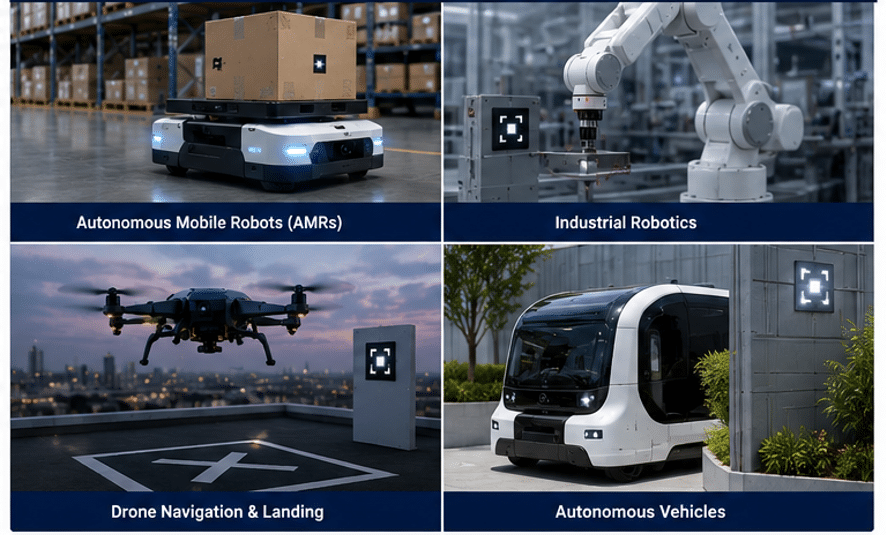
Explore Visualplas IR retroreflective Films
Machine vision systems are becoming the foundation of modern automation. Autonomous mobile robots (AMRs), warehouse robots, drones, industrial manipulators, and intelligent vehicles all rely on cameras to recognize their surroundings and determine precise positions.
However, achieving reliable visual detection is often challenging in real-world environments. Changes in ambient lighting, shadows, surface textures, and weather conditions can significantly reduce the visibility of conventional printed markers or painted targets.
Infrared (IR) retroreflective films provide an effective solution by dramatically increasing the contrast of optical targets under near-infrared illumination, allowing cameras to detect reference points more accurately and consistently.
Traditional visual markers depend on reflected ambient light.
Their performance can deteriorate because of:
As a result, machine vision algorithms may experience reduced detection confidence, unstable localization, or even complete target loss.
Unlike ordinary reflective materials, retroreflective films return incident light back toward its source.
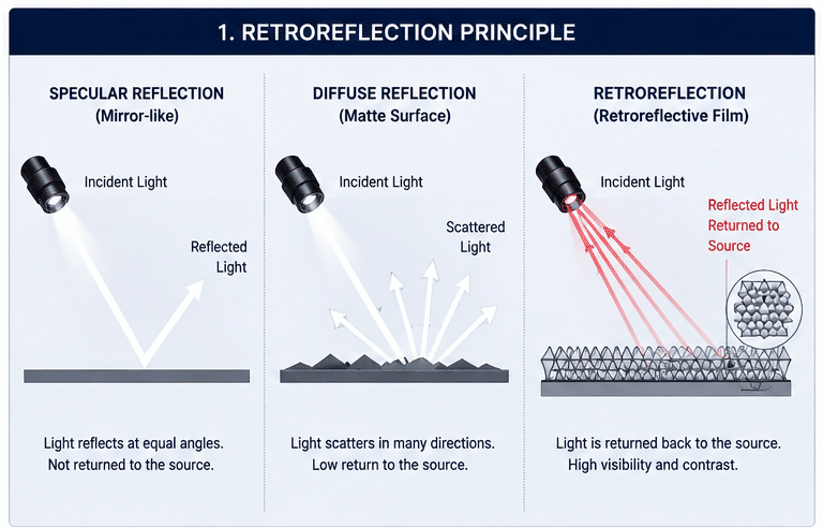
When paired with an infrared LED ring or an NIR camera illuminator, the retroreflective surface produces a highly concentrated return signal, creating exceptionally high contrast between the target and its surroundings.
This significantly improves detection robustness while reducing the influence of environmental lighting.
The principle is widely adopted in industrial vision systems where stable optical performance is more important than visible appearance.
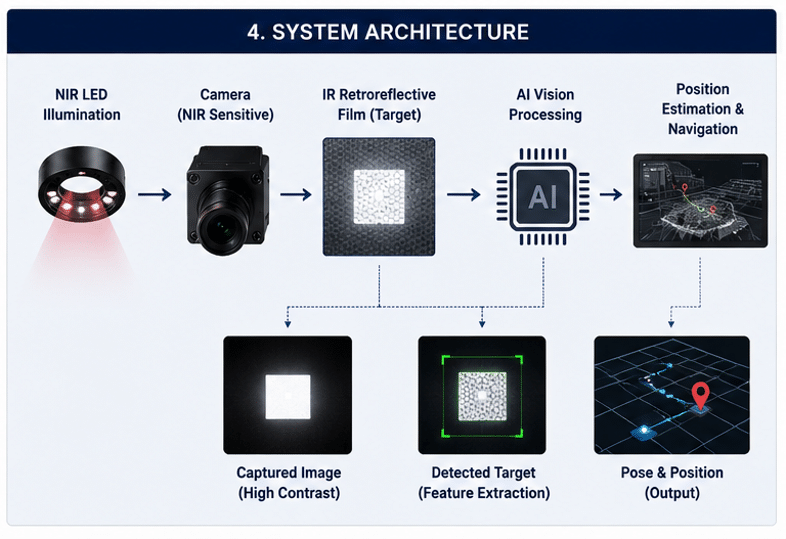
Retroreflective targets remain highly visible even when ambient lighting changes dramatically.
This enables more consistent image processing and reduces false detections.
Because more infrared light returns to the camera, targets can often be recognized from greater distances without increasing illumination power.
This is especially valuable for large warehouses, logistics facilities, and autonomous navigation systems.
The strong retroreflected signal creates clear separation from surrounding objects.
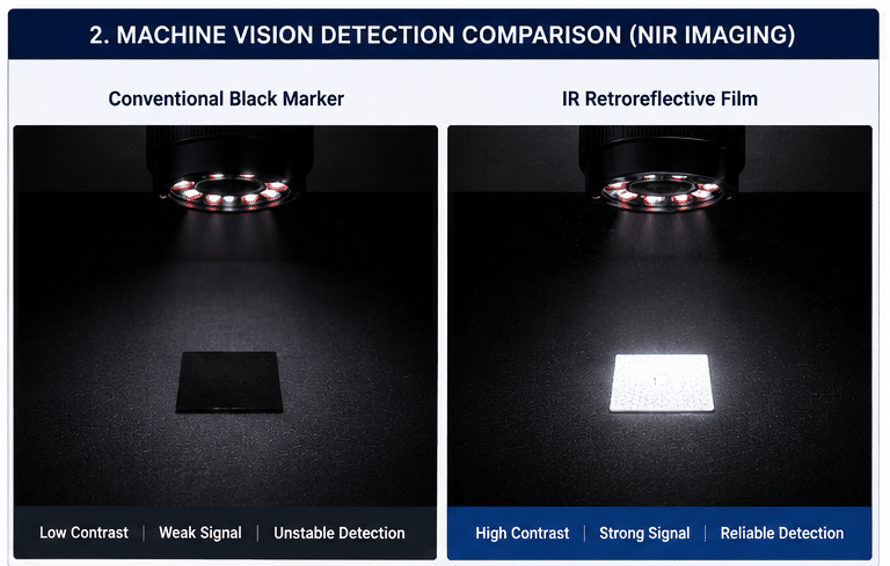
Higher image contrast improves:
Unlike painted or printed markers, retroreflective targets are much less affected by background textures or object colors.
This makes them suitable for complex industrial environments.
Outdoor applications introduce constantly changing illumination.
Clouds, shadows, sunrise, sunset, and weather conditions all influence visible-light imaging.
Near-infrared retroreflective materials help maintain stable optical performance across a wide range of operating conditions.
IR retroreflective films can be integrated into numerous machine vision systems, including:
Rather than serving as visible labels, these materials function as high-performance optical reference targets for precise camera recognition.
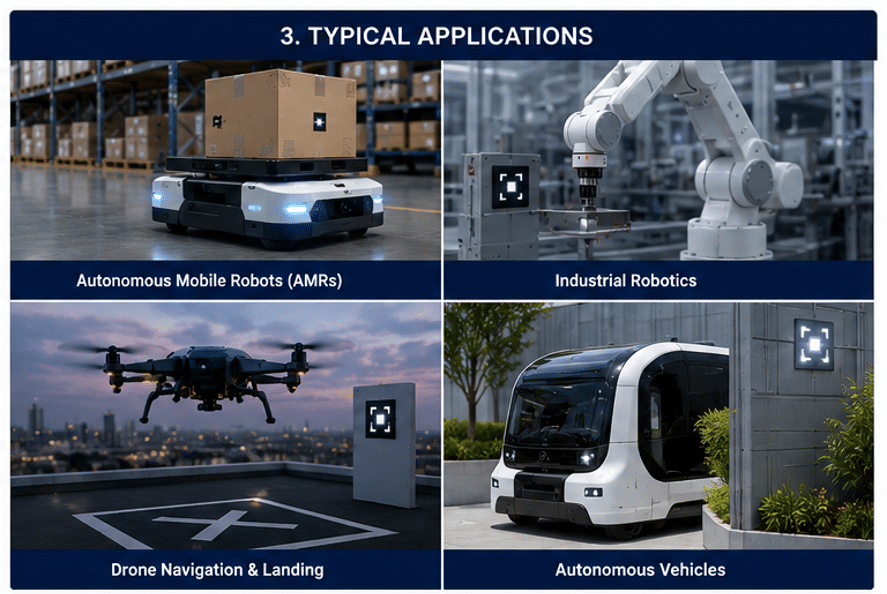
Selecting an IR retroreflective film involves more than maximizing reflectivity.
Engineers should also consider:
The reflection characteristics should match the wavelength of the imaging system, commonly within the near-infrared region.
Outdoor systems require resistance to:
The material should support:
Uniform retroreflection across the entire surface is essential for repeatable machine vision performance.
As robotics, autonomous logistics, and intelligent manufacturing continue to evolve, machine vision systems are expected to operate in increasingly challenging environments.
Future optical targets will require:
Retroreflective optical materials are becoming an important enabling technology for these next-generation vision platforms.
Reliable machine vision depends not only on advanced cameras and sophisticated algorithms, but also on the quality of the optical targets being detected.
IR retroreflective films provide higher contrast, longer detection range, and more stable performance under varying environmental conditions, making them an effective solution for robotics, industrial automation, and autonomous navigation systems.
As machine vision applications continue to expand, infrared retroreflective materials will play an increasingly important role in improving localization accuracy and operational reliability.
Please contact us, and we will respond to you shortly.
Contact UsInfrared Optics for Smart Sensing
Copyright ©2026 Visualplas Technology
